
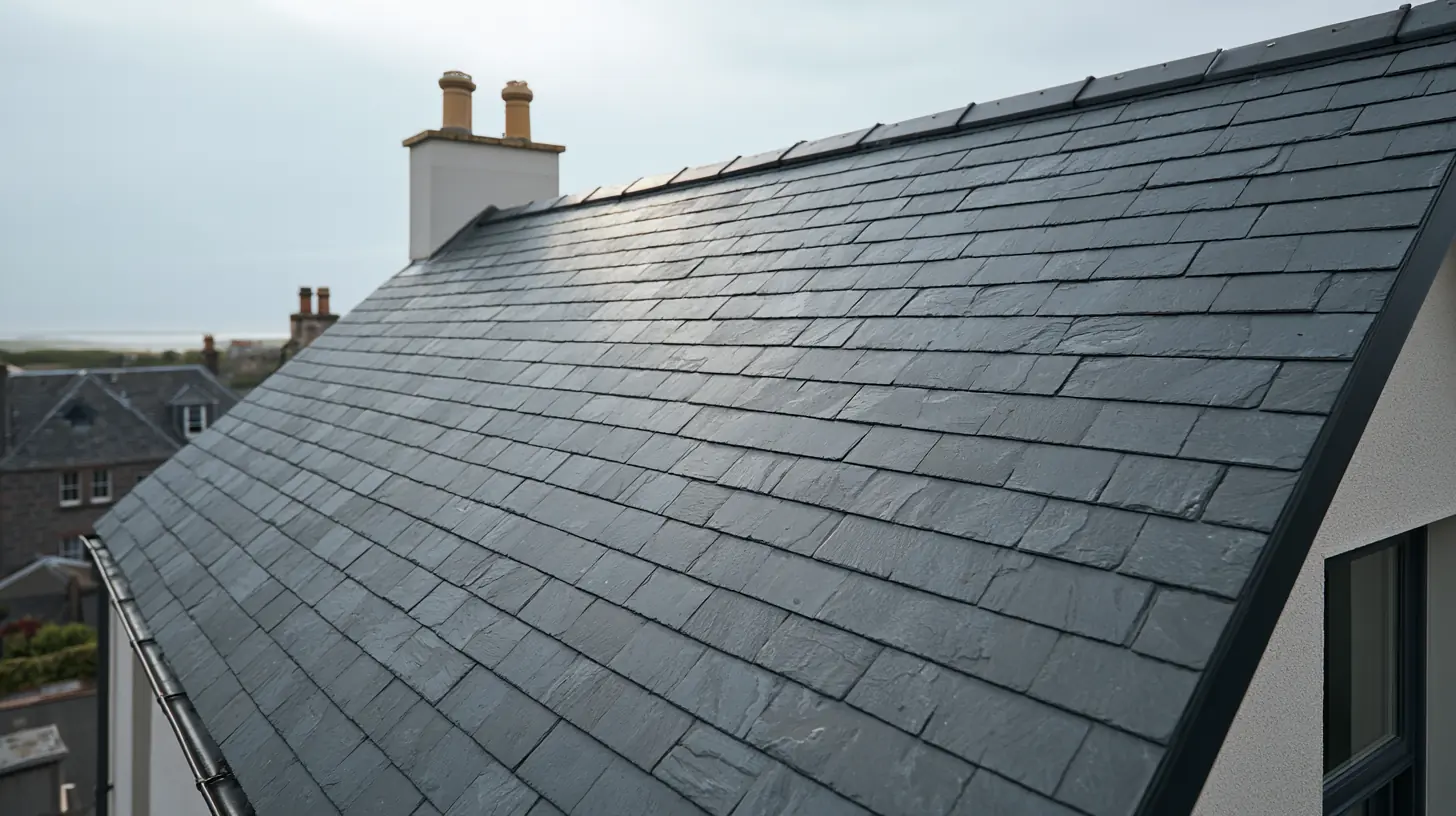
Lead flashing protects roof junctions where a roof meets a wall, chimney, rooflight or change in level.
Ayr & South Ayrshire roofing
Lead flashing and leadwork Ayr
Where is the leadwork failing?
0808 000 0000Monday–Friday, 9am–5pm
Lead flashing repairs
Leadwork for roof junctions and abutments
If water is appearing near a wall, chimney or rooflight, the leadwork is one of the details worth checking. It needs to move with the roof while keeping rain away from the joint beneath it.
Depending on the fault, the work may involve repairing or replacing flashing, abutments, soakers or another lead roof junction.
On slate and tiled roofs around Ayr, we pay particular attention to how lead soakers and flashing meet the covering, masonry and any valley or chimney detail.
Service overview
Common lead flashing repairs
The position of the leadwork, adjoining materials and water flow determine whether local repair or renewal is appropriate.
- Abutment flashingFlashing where a roof meets a wall needs to direct water back onto the roof surface.
- Lead soakersSmall lead details between slates or tiles can be important at roof junctions.
- Split or lifted leadworkMovement, age or a weak joint can change the weatherproofing at a vulnerable transition.
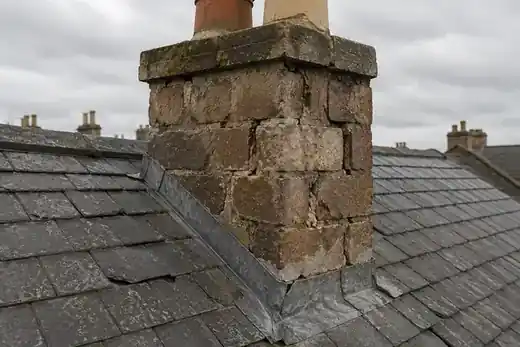
- Chimney flashingWhere the chimney is the main issue, the full stack and roof junction are assessed together.
- Lead valleysA roof valley carries concentrated water flow and needs its lining and surrounding edges checked together.
What lead flashing does
Why roof junctions need sound leadwork
Leadwork sits at a transition between different roof or wall materials. If that joint fails, water can travel behind the covering and appear inside some distance from the original fault.
The inspection considers the lead detail and the materials it meets, including nearby slate, tile, masonry, rooflight or wall junction.
- The lead detail and any visible split, lift or gap.
- The covering and masonry around the joint.
- Whether water is following a particular weather pattern.
Repair decisions
Lead flashing repair or replacement
A local repair may be suitable where the leadwork and adjoining materials remain serviceable. Replacement may be considered where the detail is worn, poorly formed, repeatedly failing or affected by movement.
The relevant code, formation and connection to the roof materials are part of a practical specification.
- Length and location of the leadwork.
- Condition of adjoining roof and masonry materials.
- Access and the detail needed to make the junction weather-tight.
Ayr & South Ayrshire
Leadwork for Ayr roofs
Leadwork is important on Ayr's older slate roofs and chimneys. Coastal weather and movement between materials can expose weak joints.
The length and position of leadwork, surrounding materials, access and masonry condition affect the work needed.
Where lead meets masonry or a roof covering, the joint needs enough overlap, suitable fixings and room for movement. Those details guide whether repair or renewal is the more durable option.
Questions
Common questions
A repair may be possible depending on the condition of the lead and the materials around it. The inspection identifies the appropriate scope.
A split, lifted edge, weak joint, movement or failure in an adjoining roof material can allow water behind a lead detail.
The position and length of the leadwork, its condition, the adjoining slate, tile or masonry and the access needed all influence the quotation.
Request a quote
Tell us about the roof
Tell us what you have noticed, where the property is and which service seems closest.
Call 0808 000 0000Get a Free Roofing Quote