Skip to content
Serving Ayr & South Ayrshire
Phone number coming soonGet a Free Roofing Quote
Ayr & South Ayrshire roofing

Roof leak repairs Ayr

Where is your leak coming from?

Lead flashingRoof valleyChimneySlipped or cracked slatesBroken or displaced tilesRidge tilesFlat roofGutters
0808 000 0000Monday–Friday, 9am–5pm

Tell us what is happening with the roof

We use your details to respond to this roofing enquiry. Formspree securely processes the submission. See our Privacy policy.

Roof leak detection

Finding and tracing a roof leak

A leak is a symptom, not a diagnosis.

A water stain or damp patch inside a property is often some distance from the roof detail that has allowed water in. Water can follow timbers, underlay, masonry and the underside of a roof covering before it becomes visible.

A proper inspection looks at the likely water route, the roof covering and the surrounding details before repair work is recommended. The aim is to understand the entry point rather than simply treat the visible mark inside.

Wind-driven rain from Ayr’s coastal weather can expose small weaknesses around slate, tile, leadwork, roof valleys, chimneys and flat-roof details.

  • Trace the likely entry point rather than treating the visible mark alone.
  • Compare what is happening indoors with the roof details outside.
  • Set out the practical repair only after the likely cause is understood.
Possible sources

Common causes of a roof leak

A leak can begin at several different roof details. Left unresolved, even a small entry point can wet insulation, stain ceilings or expose roof timbers to repeated moisture, turning a contained fault into more disruptive work. These explanations show why the source should be investigated before the repair is specified.

Possible leak source

Lead flashing and leadwork

Lead seals junctions around chimneys, walls, rooflights and changes in roof level. Splits, lifted edges, loose mortar or short overlaps can let water behind it, so the full run, its fixings and the surrounding materials should be checked rather than only the point nearest the indoor stain.

What may be checked

  • Splits, lifted edges or short overlaps
  • Loose mortar where lead enters masonry
  • Water marks after wind-driven rain
Possible leak source

Roof valleys

A roof valley carries concentrated rainwater from two slopes. A worn or split lining, displaced coverings or debris can create a route for water, sometimes only during prolonged rain, so both the channel and its adjoining edges need to be considered.

What may be checked

  • Cracks, holes or open joints in the lining
  • Debris restricting the flow of water
  • Failed edges or displaced nearby coverings
Possible leak source

Chimneys

A chimney brings together leadwork, pointing, flaunching, masonry and the surrounding roof covering. A fault in any of these areas can appear as a chimney-side leak, so the stack and adjoining roof details should be assessed together rather than judging the source from the indoor mark alone.

What may be checked

  • Loose pointing or porous masonry joints
  • Split, lifted or poorly dressed leadwork
  • Faults at the chimney back gutter or flaunching
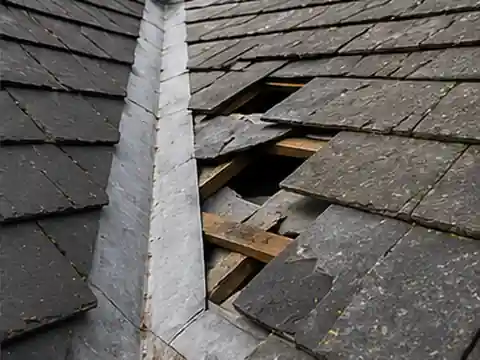
Damaged slates beside a roof valley where water can enter
Possible leak source

Slipped slates and damaged tiles

Slipped, cracked or missing slates and tiles can interrupt the overlapping roof covering and expose the layers below to driven rain. Fixings, battens, neighbouring coverings and nearby roof details should also be considered where movement or damage has occurred.

What may be checked

  • Slipped, cracked or missing slates
  • Broken, lifted or displaced tiles
  • Repeated movement in the same roof area
Possible leak source

Ridge tiles and failed mortar

Weathered bedding, failed pointing, cracked ridge pieces or wind movement can open gaps along an exposed roof line. Loose material, previous patching and the top courses immediately below the ridge all need to be considered before the repair is specified.

What may be checked

  • Loose, cracked or displaced ridge tiles
  • Open joints or missing bedding mortar
  • Previous patching that has separated
Possible leak source

Flat roofs

Flat roofs depend on a continuous waterproof layer and clear drainage. Failed laps, split membranes, damaged edges, rooflight upstands or outlets can let water in, while ponding may place extra pressure on a weak detail. That is why we check the covering, perimeter and drainage together.

What may be checked

  • Splits, blisters or open laps in the covering
  • Faults around edges, upstands or rooflights
  • Blocked outlets or persistent standing water
How we investigate

How we find the source of a roof leak

We start with the pattern of the problem: where the water appears, when it happens and whether wind direction or prolonged rain changes it.

The inspection then follows likely water paths across the roof covering and its adjoining details. A sound-looking area directly above the stain may not be the source.

Once the likely cause is understood, the written quotation can describe the affected detail, the materials involved and the practical work needed.

Interior signs

Water stains, damp patches and ceiling leaks

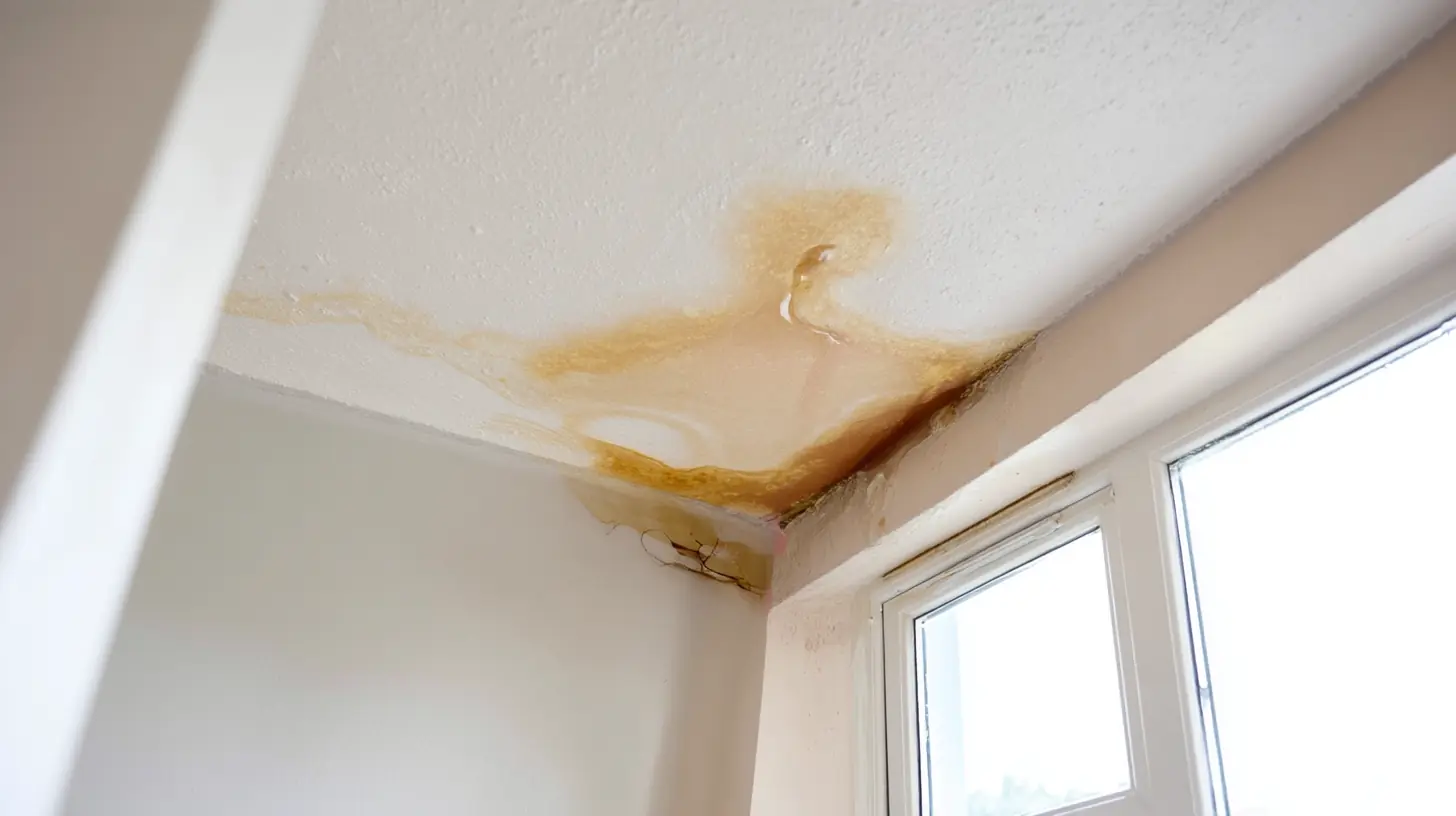
Yellow or brown ceiling marks, damp patches, peeling decoration, drips after rain and a musty smell can all point to unwanted moisture.

Note where and when you see it, but do not assume that the roof fault sits directly above the mark.

Water can follow timbers, underlay or roof layers before it appears in a room.

  • Whether marks or drips follow rainfall.
  • Whether the affected area is growing or changing.
  • Any visible roof change that can be seen safely from ground level.
Brown water staining and damaged plaster at a ceiling and wall junction beside a window
Rooflights, vents and roof space moisture

Leaks around rooflights, vents and a soil pipe

Rooflights, vents and soil-pipe penetrations are points where a roof covering is interrupted.

Their flashings, seals and surrounding materials need to direct water back onto the roof surface rather than underneath it.

Moisture in a roof space can also be condensation rather than a rain-related leak.

Condensation is often linked to ventilation and humidity, while a leak may follow rainfall or wind direction.

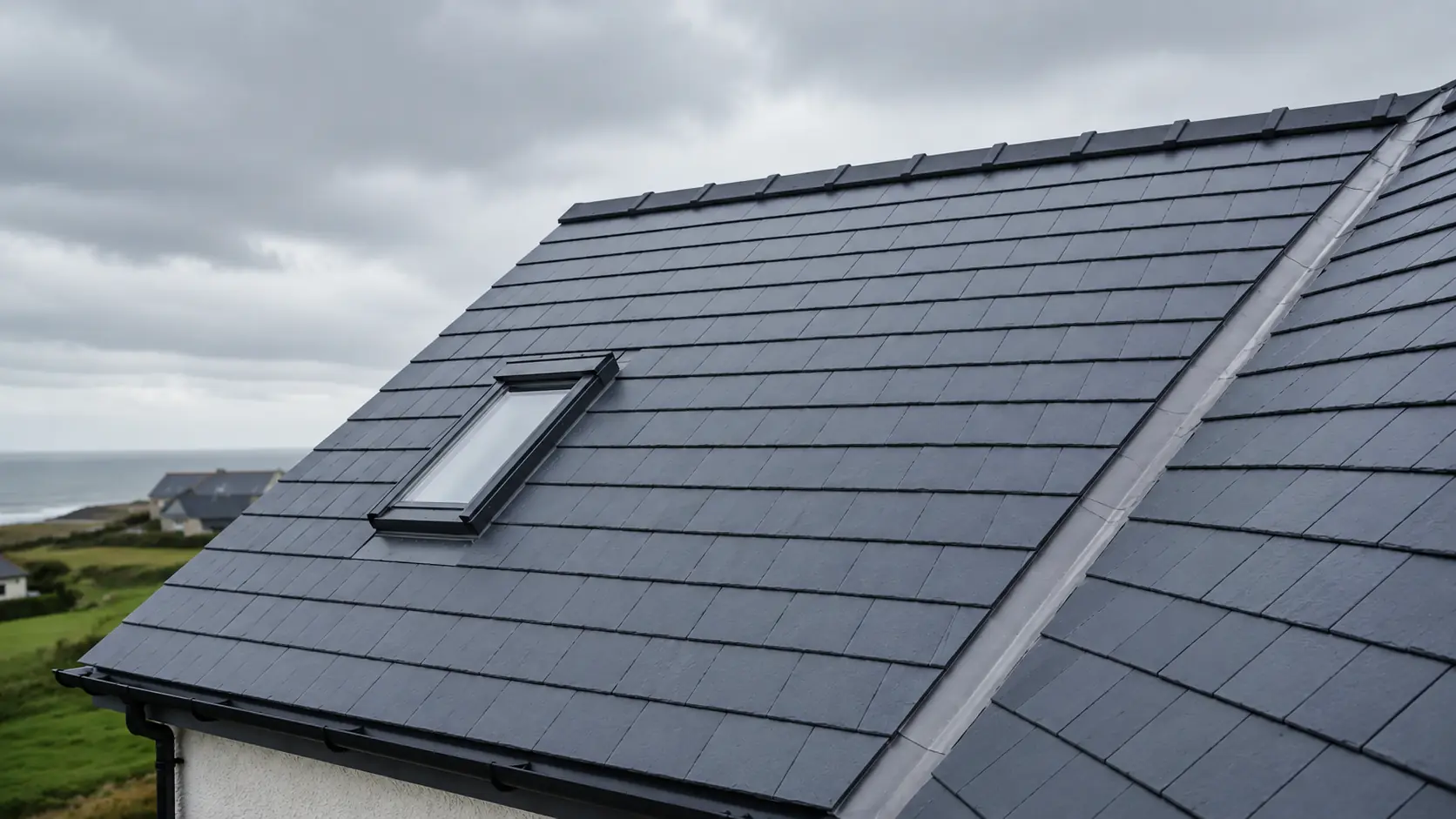
Rooflight set within a finished pitched roof covering
Questions

Common questions

There is more than one possible cause. Water may enter at a slate, tile, valley, flashing, chimney, rooflight, vent or flat-roof detail, then travel before it becomes visible inside.

Do not climb onto the roof. If it is safe, move belongings away from the affected area and note when the leak appears. You can then contact us Monday to Friday, 9am to 5pm, to discuss an inspection.

The source of the leak, roof type, materials, any hidden damage and the access needed all affect the written quotation.

Condensation can create moisture in a roof space, but it usually behaves differently from rain coming through the roof. When and where the moisture appears helps us work out the likely cause.

Request a quote

Tell us about the leak

Tell us where the water appears, when you notice it and where the property is.

Tell us what is happening with the roof

We use your details to respond to this roofing enquiry. Formspree securely processes the submission. See our Privacy policy.

Call 0808 000 0000Get a Free Roofing Quote