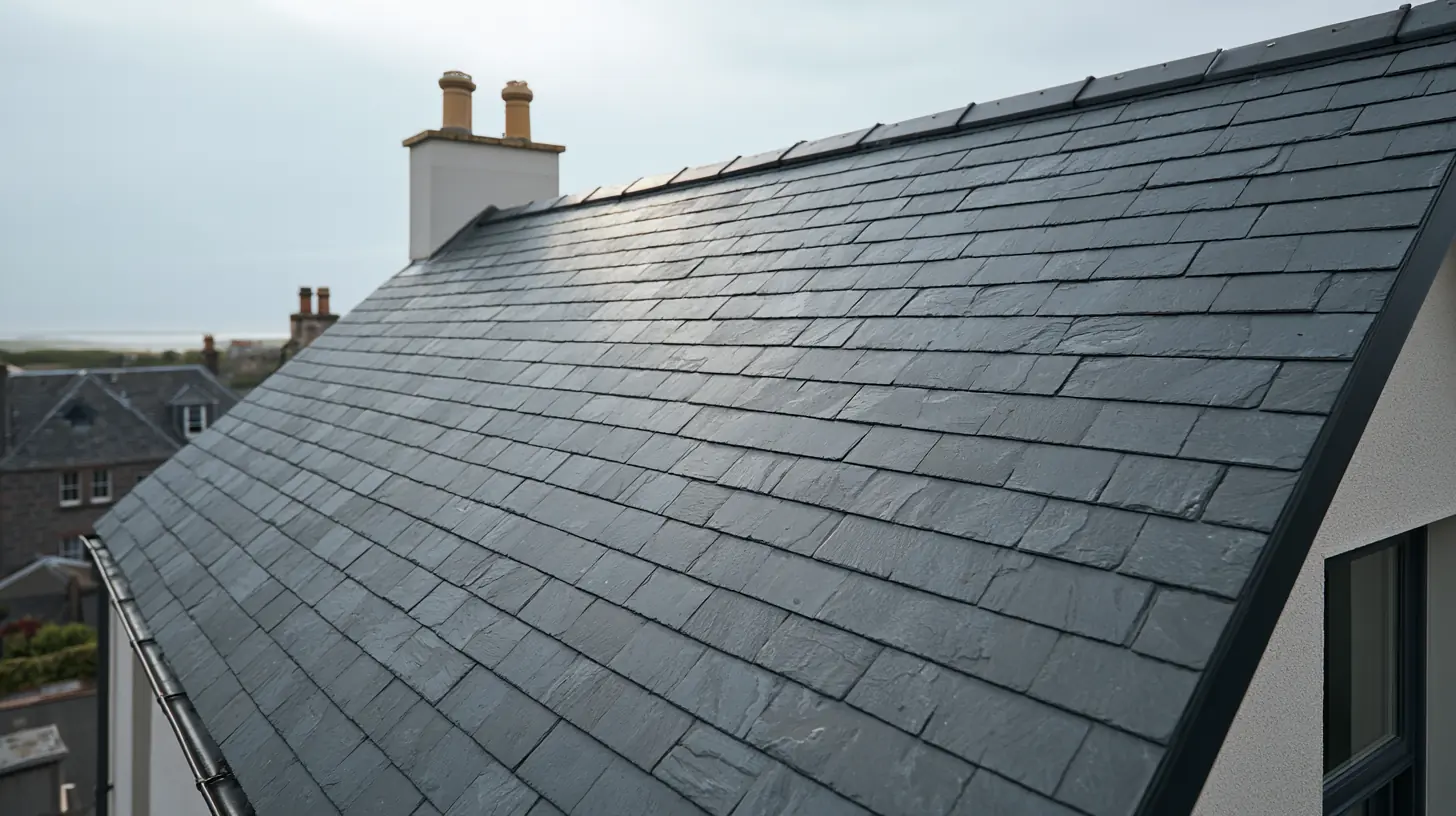
Slipped or broken slates
Slipped or damaged slates can expose the roof layers beneath and may point to worn or failed fixings.
Key points
- Replace damaged slates.
- Check failed fixings.
- Inspect adjoining courses.

What does your slate roof need?
Whether you have one slipped slate or a covering that is wearing out, the right approach depends on the slate, its fixings, the nearby courses and the roof details around it.
Many older Ayr homes combine natural slate with chimneys and leadwork. We look at how those parts work together before deciding whether a targeted repair or wider replacement makes sense.
That assessment also helps with matching Scottish, Spanish or other natural slate, because size, thickness and fixing method matter as much as colour.
These are the main slate repair, replacement and material considerations for an Ayr roof.
Slipped or damaged slates can expose the roof layers beneath and may point to worn or failed fixings.
Replacement can range from a targeted repair to renewing the complete slate covering where deterioration is widespread.
Slate origin, appearance, size and durability should suit the property, roof pitch and Ayr's coastal exposure.
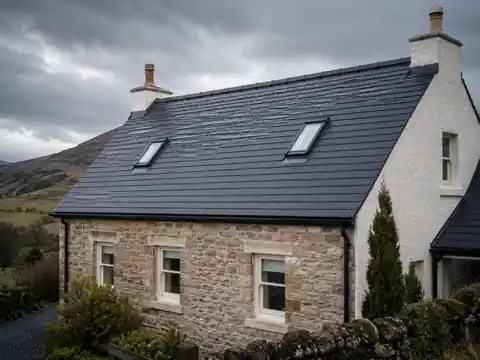
A targeted repair looks at the failed slate and the nearby course, but also at the fixings, underlying materials and adjoining valley, flashing or ridge detail where relevant.
The aim is to understand why the slate has moved or broken before setting out the repair.
For a planned slate replacement, the roof pitch, underlay or sarking, battens, fixings, valleys, flashings and access all inform the scope. Slate type should be considered alongside the property and its weather exposure.
If deterioration extends across the full roof, replacement may be more practical than continuing with isolated slate repairs.
For more detail, see New roofs and roof replacement.
Natural slate is familiar in Ayr's Victorian and older property stock. Slate choice, fixing method and lead details need to suit coastal exposure.
Slate type, roof size, pitch, access, sarking, battens and chimney or valley details guide the quotation.
Matching natural slate is not only about colour. Size, thickness, origin, fixing method and the condition of the sarking or battens all affect whether a repair sits securely within the existing covering.
A slipped or broken slate may be repaired where the surrounding roof remains serviceable, but the fixing, nearby courses and adjoining details should also be assessed.
The suitable slate depends on the existing roof, planned appearance, fixing method, roof pitch and coastal exposure.
Yes. A planned slate replacement considers the covering, layers beneath it and the roof details that make the completed roof weather-tight.
Slate type and availability, the fixing method, the extent of damage, roof access and the condition of nearby sarking, battens and leadwork all matter.
Tell us what you have noticed, where the property is and which service seems closest.