
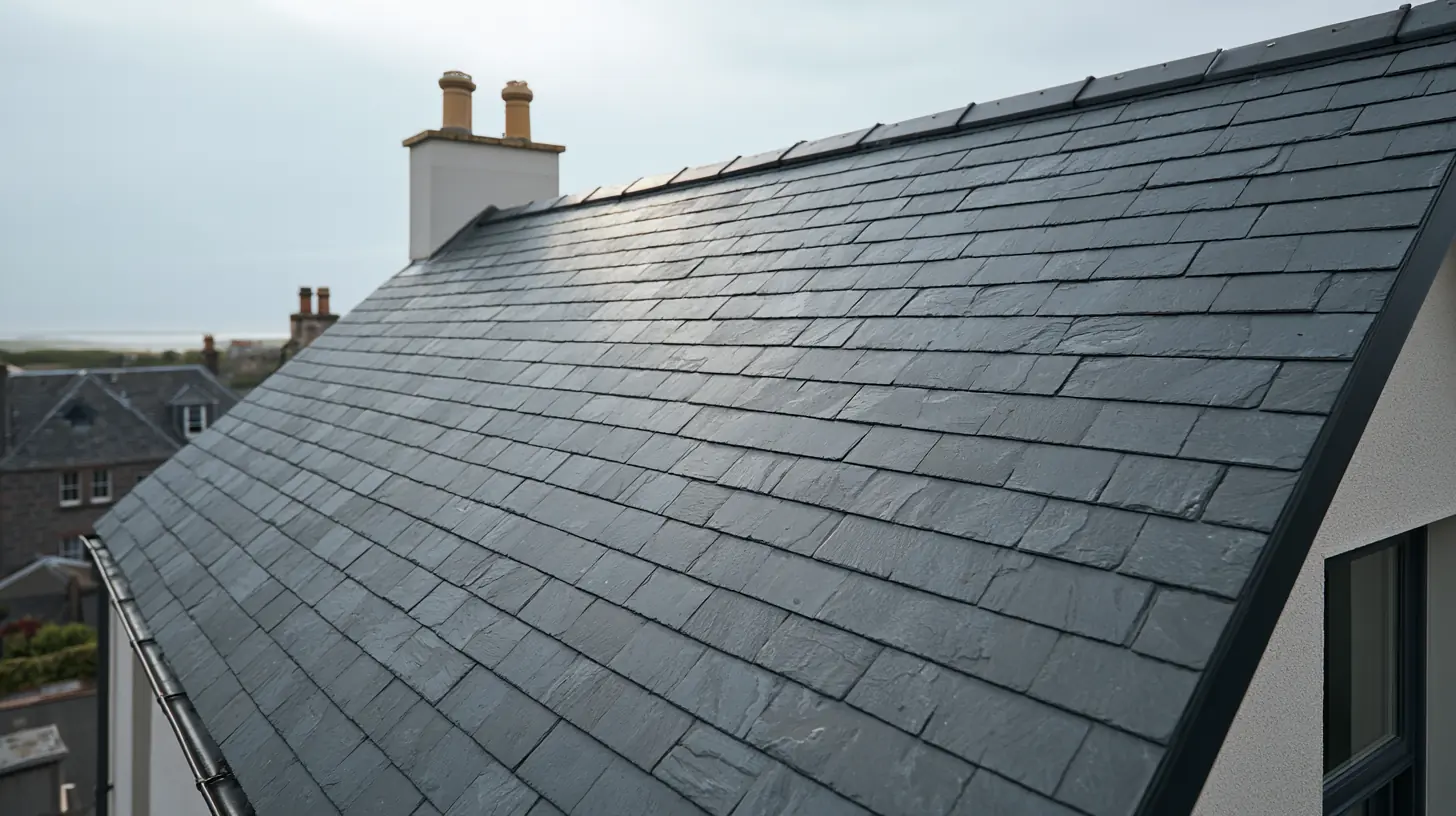
A valley leak can be caused by a worn lining, failed edge, damaged surrounding tiles or slates, defective pointing or restricted water flow.
Ayr & South Ayrshire roofing
Roof valley repairs Ayr
What is happening in the roof valley?
0808 000 0000Monday–Friday, 9am–5pm
Roof valley repairs
Roof valleys, valley leaks and lining repairs
Because two roof slopes drain into a valley, a lot of rain passes through a relatively narrow channel. A worn lining, failed edge or displaced slate or tile can therefore show up quickly as a leak.
We check the channel and its surrounding edges before deciding whether the valley needs a local repair, renewed lining, edge pointing or related slate or tile work.
The valley material—often lead or another metal lining—also has to suit the slate or concrete tile around it, the roof pitch and the volume of water it carries.
Service overview
Common roof valley problems
A valley is a water channel rather than a simple roof covering, so its lining, edges and the materials feeding into it are assessed together.
- Worn or damaged valley liningA lining may be under repeated water pressure during sustained rain.
- Lead valleysLead is one possible valley material and needs to be formed and detailed for the roof.
- Failed valley pointingOpen mortar at a valley edge can expose adjoining materials and alter water flow.
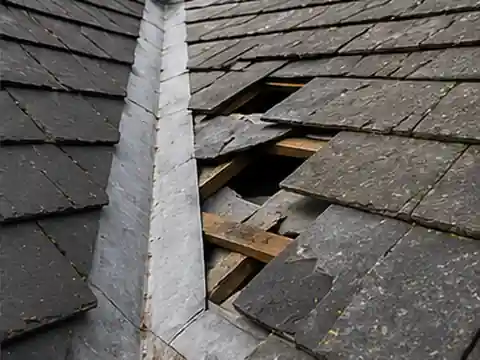
- Damaged slates or tiles beside the valleyA fault at the covering edge can direct water where it should not go.
- Debris and restricted flowLeaves or debris can slow water and place more pressure on a vulnerable valley detail.
Valley types
What a roof valley does
Valleys may use lead, other linings or GRP details depending on the roof. Each receives water from two roof slopes, so the correct overlap, edges and condition of surrounding coverings all matter.
The inspection follows the channel and the materials feeding into it, rather than looking at one visible mark alone.
- The valley material and its condition.
- Surrounding slates or tiles and the valley edges.
- Water flow, debris and any sign of leakage beneath the covering.
Repair scope
Why roof valleys leak and how they are repaired
A valley can leak through a worn lining, failed edge, displaced surrounding materials, defective pointing or a detail below the visible covering. The repair route depends on the cause and length of the affected channel.
General leadwork and general leak tracing retain their own pages where the valley is not the primary issue.
For more detail, see Lead flashing and leadwork.
- Valley length, material and roof pitch.
- Condition of surrounding roof materials.
- Safe access and any repair needed beneath the covering.
Ayr & South Ayrshire
Roof valleys on Ayr homes
Ayr's heavy rain puts valleys under repeated flow. Keeping the channel clear and surrounding covering sound helps avoid concentrated water ingress.
Valley material, roof pitch, length, access and damage to nearby coverings affect the repair specification.
The inspection follows the full water path, including the lining, open joints, edge pointing, nearby underlay and displaced slate or tile that could be feeding water beneath the covering.
Questions
Common questions
A lead valley is a roof drainage channel formed in lead where two roof slopes meet.
Valley pointing may be renewed where appropriate, but the valley lining and surrounding materials should be assessed at the same time.
Lead and other lined valleys may be repairable, depending on the lining, edges, surrounding slates or tiles and the extent of the fault found.
Request a quote
Tell us about the roof
Tell us what you have noticed, where the property is and which service seems closest.
Call 0808 000 0000Get a Free Roofing Quote